Belle Sisters (Host):
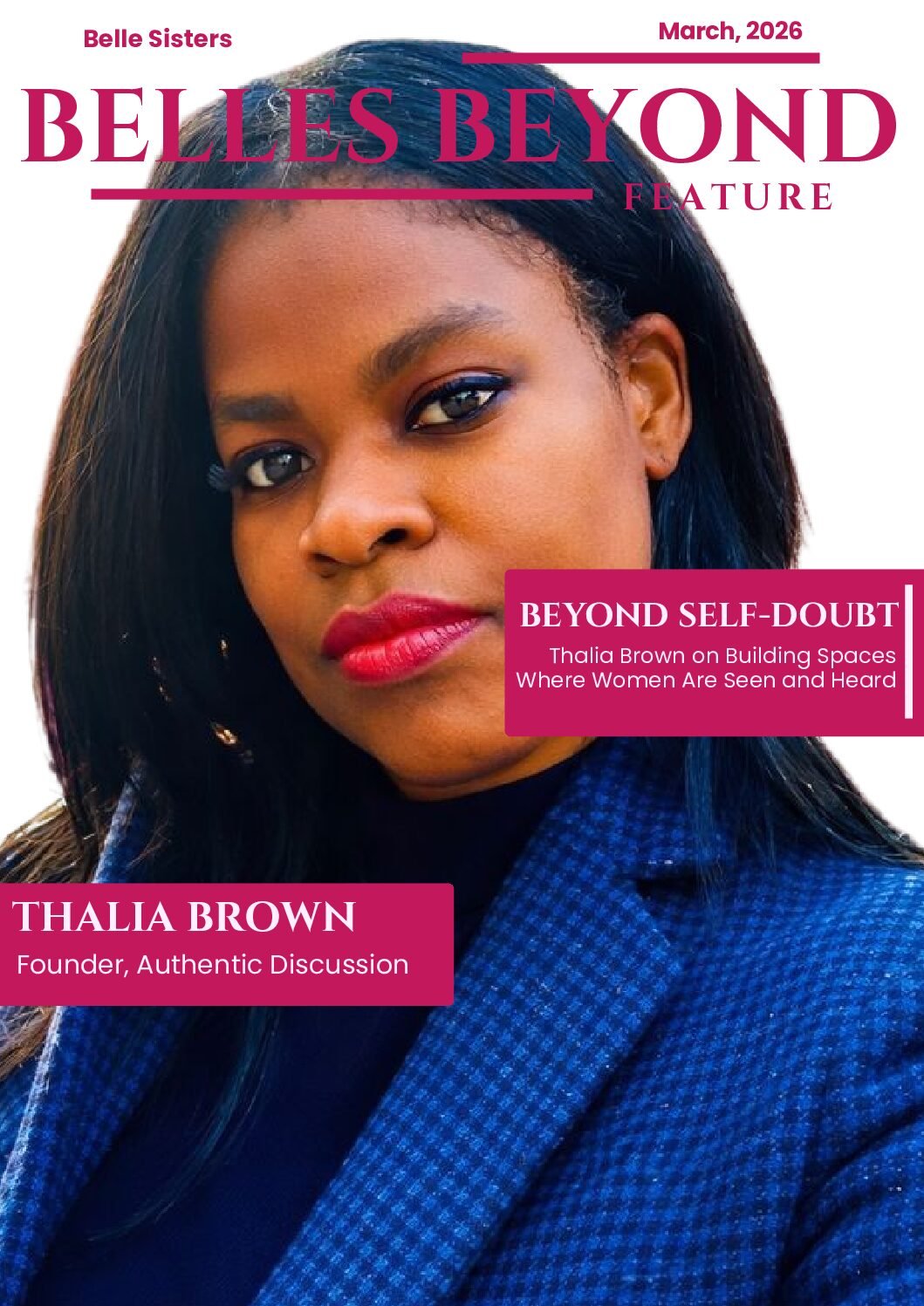
Hi everyone, welcome to Belle’s Beyond Feature by Belle Sisters. My name is Nmasichi, and I’m your host. Today, I’m joined by Thalia Brown. Hi, Thalia, welcome!
Thalia Brown:
Hi! Thank you so much for having me.
Belle Sisters:
We’re excited to have you. Thalia is the founder of The Authentic Discussion, a modern think tank and women’s leadership institute created to address emerging diversity trends, recruitment practices, and systemic challenges in today’s workforce.
To start us off, can you tell us a little about yourself and the work you do?
Thalia Brown:
Absolutely. I’ll give you the high-level version. I’ve been a recruiter for about 22 years, with a strong focus on diversity recruitment throughout my career. For the past several years, almost eight now, I’ve worked closely with Wall Street firms, helping to build pipelines of African American and Hispanic talent.
A big part of my work has been supporting organizations that serve Black and Brown communities and helping corporations develop internal pipelines, placing talent, grooming leaders, and building long-term equity in leadership. I’ve done this work at scale across many companies.
As diversity initiatives started to shift and, in many cases, lose institutional support, I became deeply concerned about what would happen next. I didn’t want the progress we’d made to simply disappear. That’s when I began thinking seriously about The Authentic Discussion.
Initially, it was meant to be a think tank focused on amplifying diversity topics. But it grew into something broader, a leadership platform centered on women. While the spotlight remains on women of color, particularly those from the Black African and Caribbean diaspora, as well as Brown women from South American, European, and other marginalized backgrounds, the vision is inclusive.
I want women from all backgrounds, Asian, Latina, Black, Muslim, Turkish, Iranian, to feel seen, heard, and represented. This is about thought leadership, celebration, and visibility. As seasons change, whether it’s Black History Month or the Commission on the Status of Women, I try to expand the lens and make space for every woman’s voice. At the core, the goal is simple: people deserve to feel visible, valued, and empowered.
Belle Sisters:
With work that challenges systems and centers women so boldly, I imagine there’s been some resistance. Have you experienced backlash?
Thalia Brown:
Yes, I have. I’ve dealt with digital harassment, some doxxing, and a fair amount of bullying. A lot of the backlash comes from people who are upset that men aren’t centered in this work.
But the reality is that men have had a long runway, decades, centuries even, of access and opportunity. Women are still fighting for parity. We’ve experienced setbacks, silencing, and intimidation, both online and offline.
Unfortunately, that’s part of the reality of being an outspoken woman. People will try to tear you down. At some point, you have to decide whether you’re going to let that stop you or whether you’re going to power through and stand in who you are.
Belle Sisters:
Has any of that resistance shown up structurally, through funding barriers, partnerships, or political limitations?
Thalia Brown:
That’s a great question. I’ve been very intentional about how I structured the business. The Authentic Discussion is an LLC, not a 501(c)(3). I’m not relying on government grants, especially given the current political climate where funding is limited and ROI expectations are immediate.
Instead, I’ve positioned this as an educational institute. That allows me to focus on partnerships and sponsorships with organizations that align with the vision. When companies see the value and impact clearly, they’re more willing to invest without needing government backing.
Belle Sisters:
What was the defining moment that led you to officially create The Authentic Discussion?
Thalia Brown:
I was taking an online entrepreneurship course, and honestly, it fell flat. It didn’t address the realities I face as a woman of color or as a female founder focused on uplifting other women.
The training was surface-level, things like using apps to calm yourself down instead of addressing root causes like emotional intelligence, confidence, and power dynamics. It felt like bare-minimum content.
In the U.S., women are often treated as a subset of diversity rather than as leaders in their own right. That’s very different from what you see in other cultures, where women occupy top leadership roles without question.
I kept seeing women receive training that didn’t truly equip them to own the room, advocate for themselves, or navigate imposter syndrome. As a recruiter, I’ve watched incredible women sabotage themselves mid-interview, apologizing, second-guessing, shrinking, after performing exceptionally well.
The problem isn’t competence. Ninety percent of the time, women know exactly what they’re doing. The issue is the internal narrative. I’ve seen this personally, generationally, and professionally. We need tools that address mindset, confidence, emotional regulation, and leadership presence, not just technical skills.
That’s what I’m trying to build. Not a perfect solution, but a meaningful step forward.
Belle Sisters:
What would you say to a Black woman or woman of color who’s building a business and battling self-doubt, especially outside the traditional 9-to-5 path?
Thalia Brown:
Be honest. Be yourself. People aren’t buying packaging, they’re buying you. You have to dissolve those internal narratives and be proud of who you are and what you’re building.
I said this recently during a session at NASDAQ: people are already drawn to your brand for a reason. Your job is to believe in it enough not to sabotage yourself. If you don’t believe in your work, no one else will.
We are often our own biggest critics. No one can derail you more effectively than you can.
Belle Sisters:
You shared a recent experience where self-doubt showed up for you in real time. How are you navigating that now?
Thalia Brown:
Through self-reflection and self-audits. I revisited my traction, my progress, partnerships, milestones. A mentor once told me to create a one-year traction report on myself and actually look at what I’ve built.
We’re so quick to dismiss our achievements. But when you step back and document your impact, your confidence shifts. You start to see your credibility clearly.
Failure happens. You have to fail forward. One of my favorite quotes, Denzel Washington talks about this often, is that growth comes through failure. You can’t be afraid of mistakes. Entrepreneurship is messy.
Belle Sisters:
What’s the hardest part of starting a business that no one really prepares you for?
Thalia Brown:
The loneliness, and the self-doubt. The first year of entrepreneurship is a construction site. You’re figuring out your brand, your messaging, your audience. It looks chaotic. You have to forgive yourself for that.
Some founders experiment quietly. Others, like me, build publicly, and that invites criticism. You’ll lose deals. You’ll doubt yourself. That’s normal. You don’t really feel grounded until two to five years in, when the market starts responding. Until then, you have to trust the process and keep building.
Belle Sisters:
This has been incredibly powerful. Thank you for your honesty and depth, Thalia.
Thalia Brown:
Thank you for creating this space. Conversations like this are exactly why platforms like yours matter.